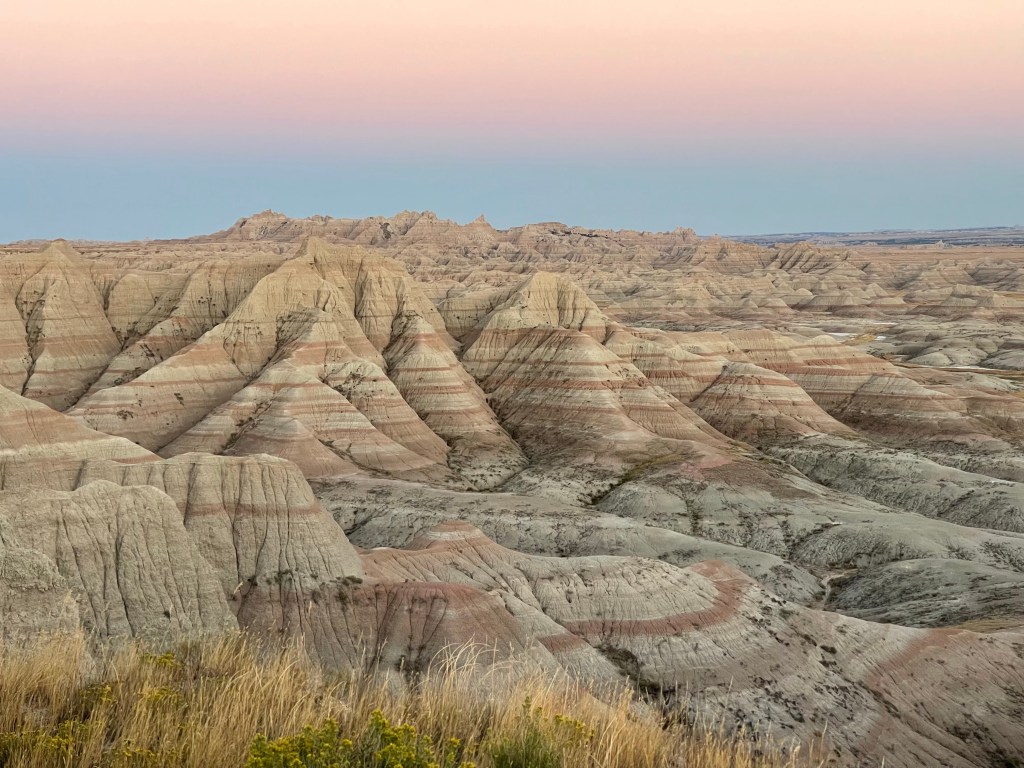
Paralleling I-90 in the grasslands of South Dakota, Badlands National Park is most often experienced as a quick detour. Based on the throngs of tourists I witnessed on this trip, I would guess that most visitors give the park a couple hours on the way to Yellowstone and more popular attractions. That was the case for me a decade-plus ago when we took one exit, drove through the park, then continued west. This definitely gave an unfair impression. This was the place that provided some of the most memorable views of my time in South Dakota. I now think Badlands National Park may be one of the more underrated destinations of South Dakota and the National Park system.
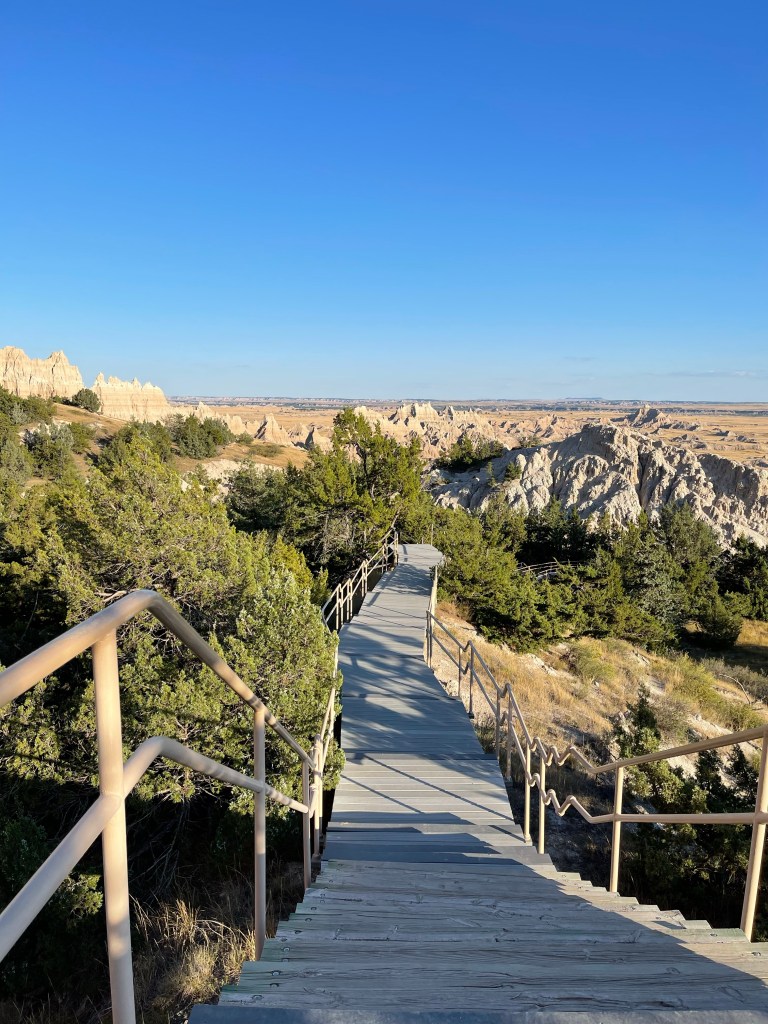
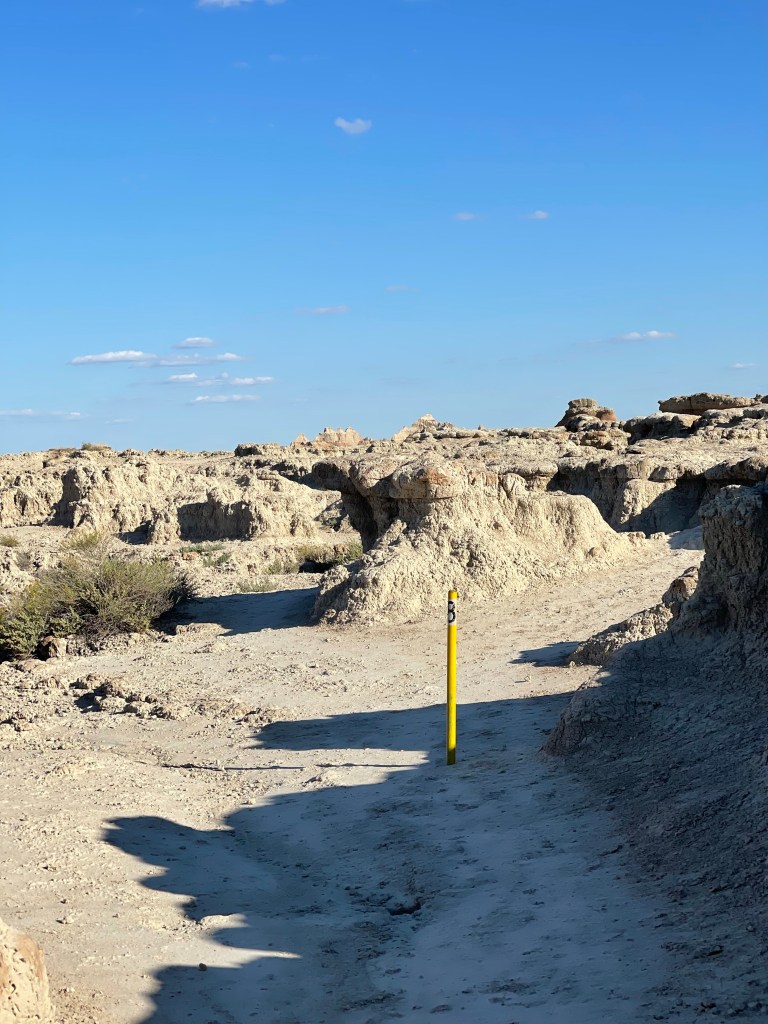
This time I had three days in the area and I spent several mornings and evenings just driving through the park and watching the way the sun changes the scenery. Numerous turnouts and short hikes provide the opportunity to view the landscape from different angles and witness the light as it movers across the color spectrum. I highly recommend exploring a bit by foot. Just be aware that some of the trails out here are not the obvious footpaths many of us are used to. The barren rock faces are too prone to erosion, so some paths involve trekking from pole to pole. It does take away from the feel of nature, but beats being lost!
More adventurous explorers are welcome to leave the marked trails and explore the hills and hoodoos on their own. Badlands National Park is unique in that it does not insist travelers stay on trail. You are free to wander wherever your heart may take you! However, only experienced hikers should take advantage of the Open Hike Policy and trekkers should be well-supplied before any such attempt.
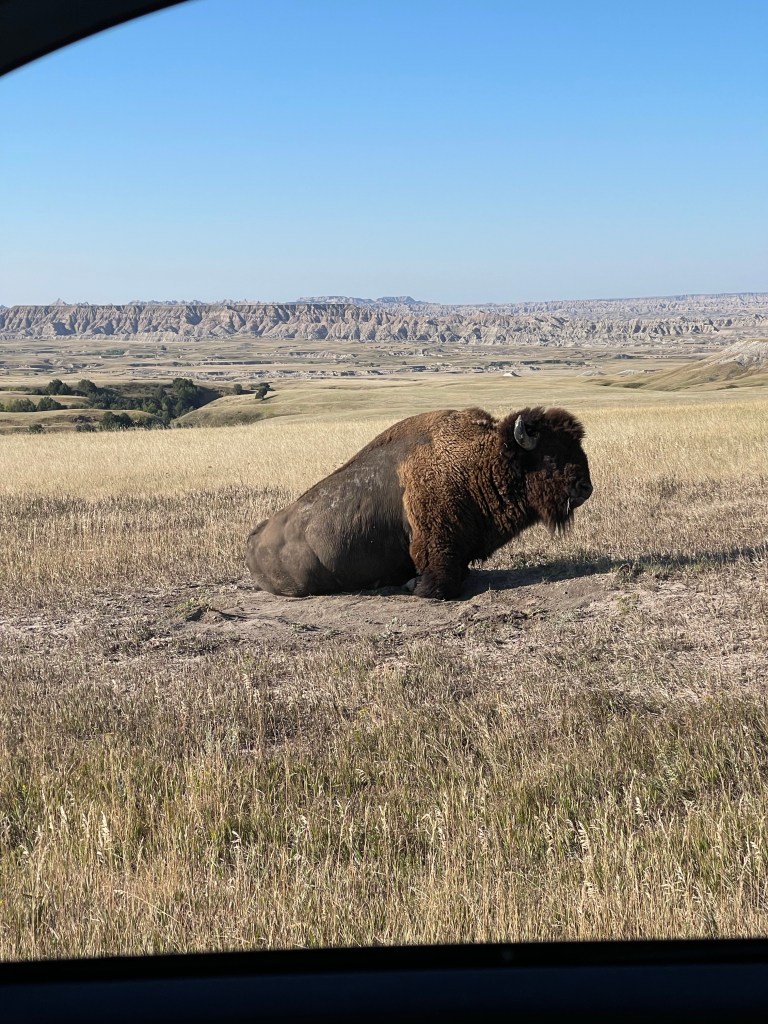
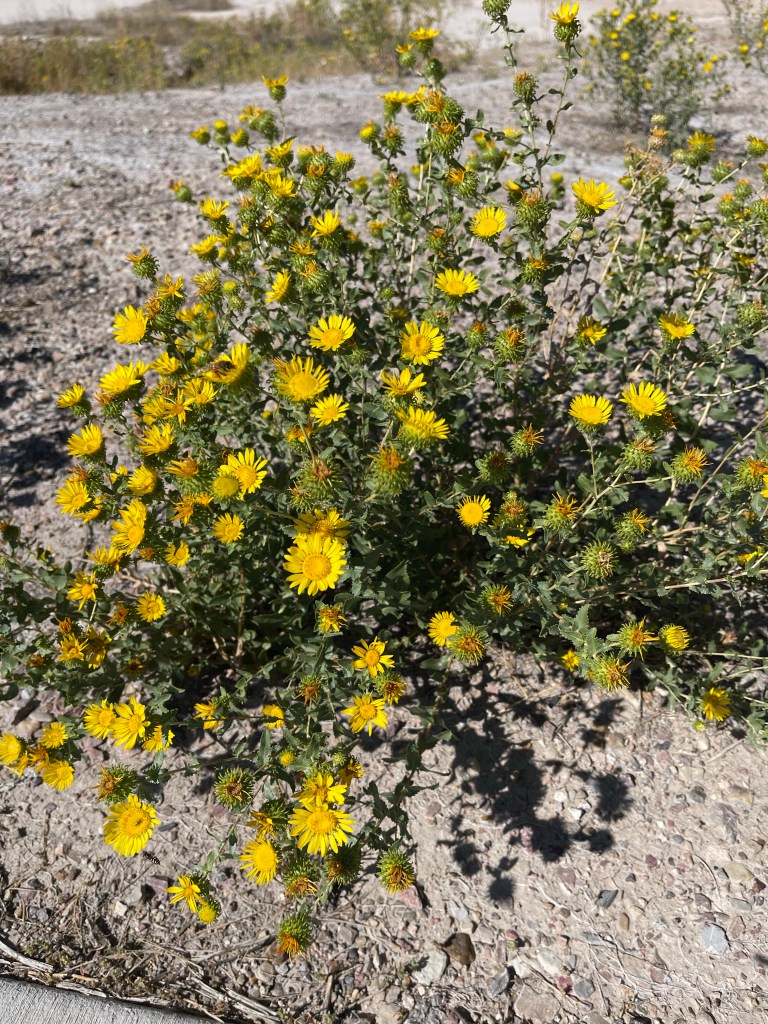
If geology is not your thing, this area also has great animal habitat. I was looking through binoculars at a prairie dog town, seeking burrowing owls, when I saw a black-faced mustelid sneak among the dirt pyramids. My heart stopped as I wondered if I might be seeing one of the most endangered species in the United States. The black-footed ferret was declared extinct in 1979, but a small population was discovered in 1983. Disease heavily impact that group, so the remaining 18 individuals of the species were taken into captivity in the mid-80’s. Seven of that group were able to reproduce and are ancestors of the approximately 1500 black-footed ferrets that exist today. About 250 of those ferrets still live in captivity, but the bulk that live in the wild are in Badlands National Park and surrounding areas. I was thrilled at the thought of having glimpsed one of the success stories of the Endangered Species Act when I saw a weasel-like creature in the distance. But a kind ranger explained a badger would be much more likely to be seen hunting in a prairie dog town in broad daylight. My disappointment was very brief because I think this was my first badger sighting! It may not have been a rare moment, but it was definitely special to witness this predator skulk amongst its prey.
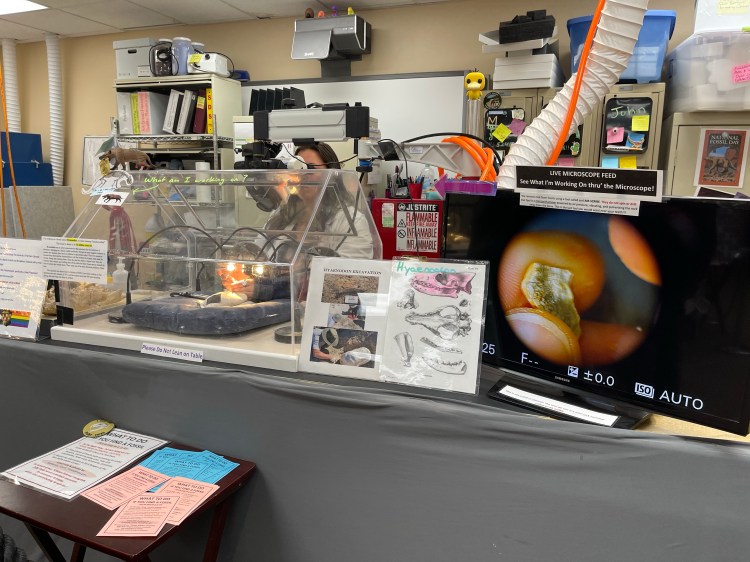
Badlands has been home to amazing animals for eons. Fossil hunters may enjoy the opportunity to discover remnants never before viewed by human eyes. Persistent erosion in the regions constantly reveals new remains. The visitor center and displays along the trails provide excellent interpretation of the prehistory of the area. Paleontologists clean fossils in a special room off the visitor center and are available for questions. Of course it is a national park and therefore illegal to remove anything that one finds. But those who report found fossils to the National Park Service are recognized in a special display. Seeing the wall of fossil-finders definitely made me keep an eye out when I was walking the trails!
Wall Drug
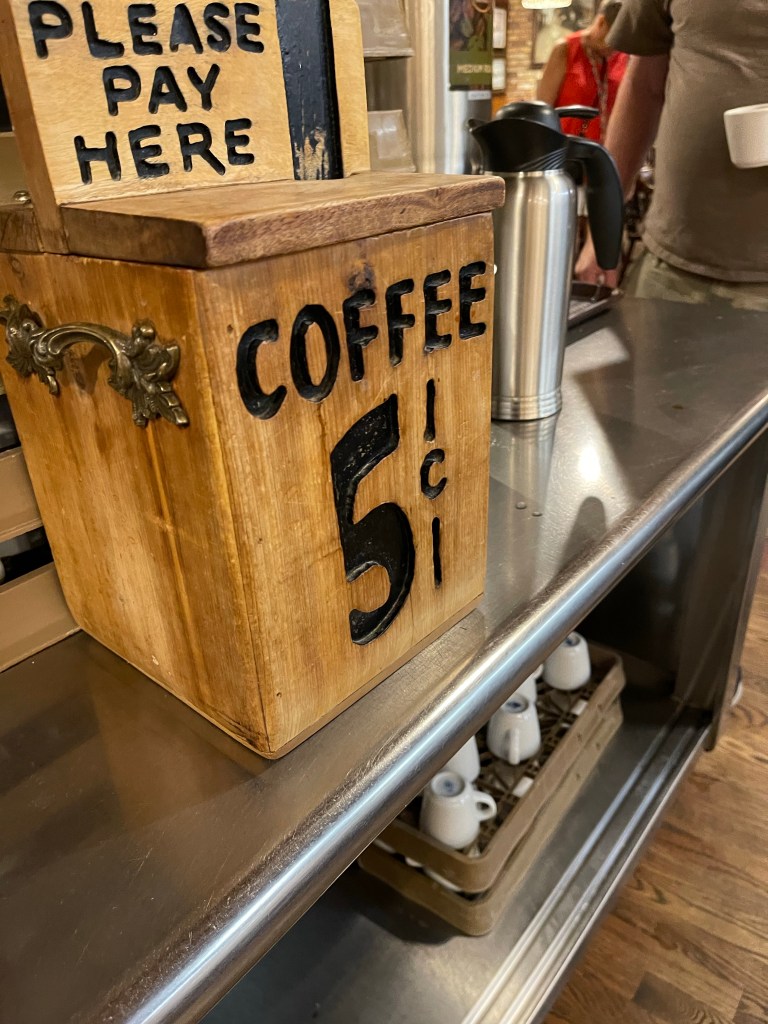
No drive across South Dakota would be complete without a stop at Wall Drug. What the attraction lacks in appeal, it makes up for in marketing. Hundreds of signs across the state declare the assets of the approaching store, quaintly advertising 5 cent coffee and free ice water. Like most hyped attractions, Wall Drug is little more than a tourist trap of souvenir shops and photo opportunities, but you have to appreciate the history and the hustle. Tradition makes it mandatory to stop.
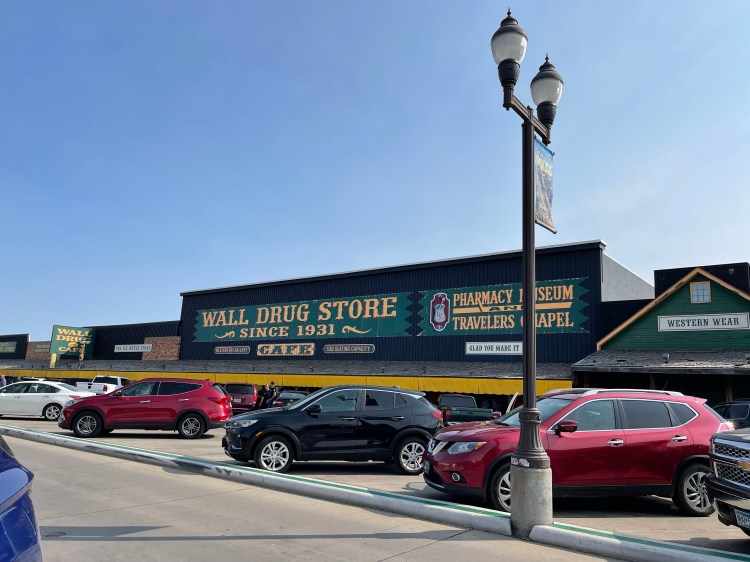
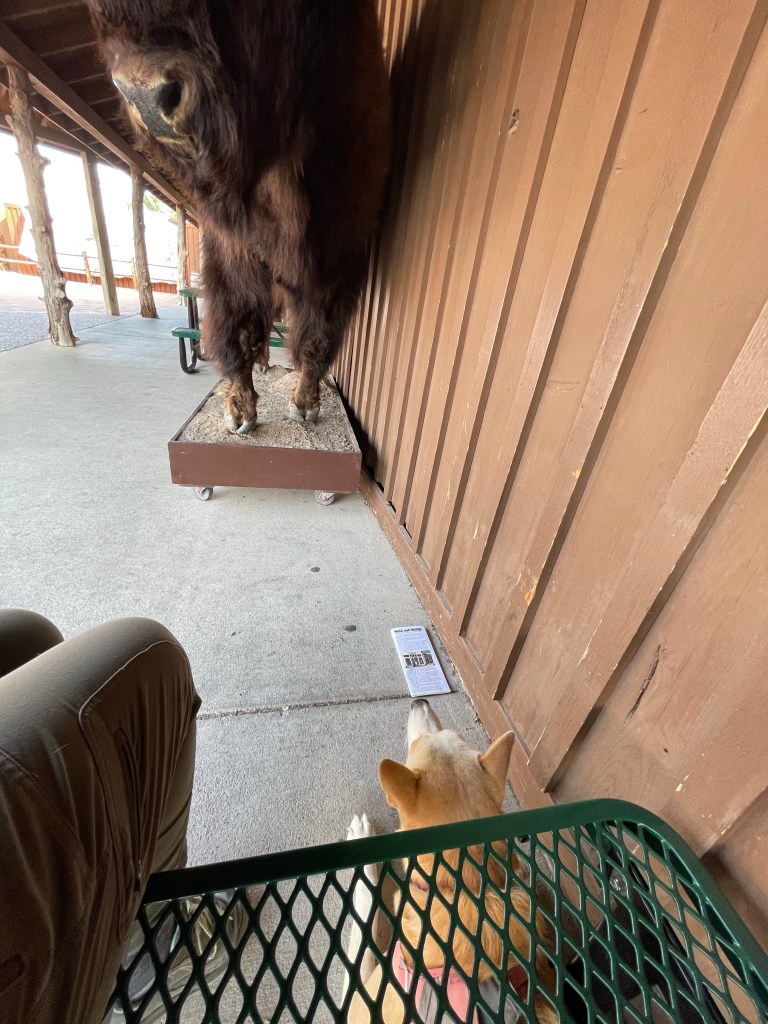
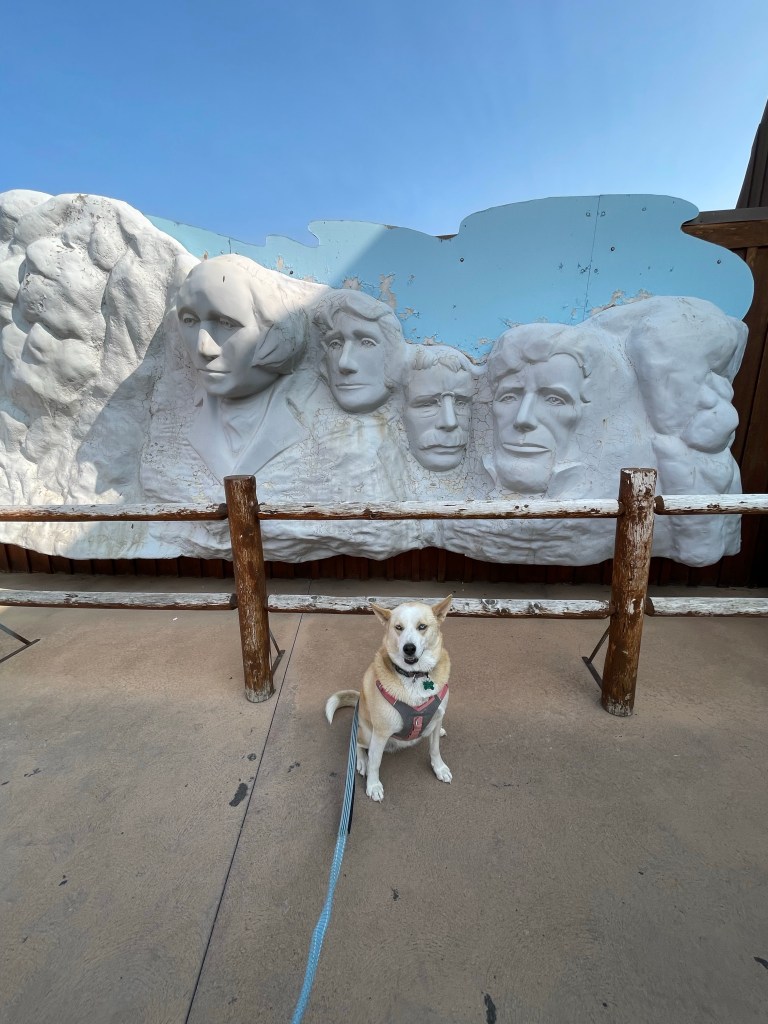
And there are some parts that are worth-while. I enjoyed breakfast to-go, including some of the famous donuts and cheap coffee. The entire location, besides the places serving food, is surprisingly dog-friendly. In the “Backyard”, an outdoor area with multiple props for South Dakota vacation photos, Blue reluctantly encountered a taxidermied bison. And since she didn’t get to visit the Mount Rushmore National Monument, I told her the six foot replica was the real thing.
Wall Drug should be on any road trip bucket list and is a fun stop as long a expectations can be managed.
Minuteman Missile Silo
Visiting a missile silo is a little outside of what I would normally do. Military history isn’t one of my many interests. Sometimes the drive for stamps for my national parks passport makes me explore places outside of my wheelhouse. And I am so glad I made this stop. This national historic site does an excellent job interpreting the scope and gravity of the nuclear weapons age and gave me a lot to ponder for several days.
As an 80s kid, I am vaguely aware that the nuclear arms race created a stockpile bombs capable of destroying the world several times over. The displays in the small museum at the visitor center made me think more about what it would be like to live on top of one of the thousands of missile silos distributed across the Great Plains. Another exhibit recounts the number and circumstances of near-misses across the decades; sometimes nuclear decimation has been averted by a single person in the chain of command who defied orders on the basis of a gut feeling, often to great personal detriment.
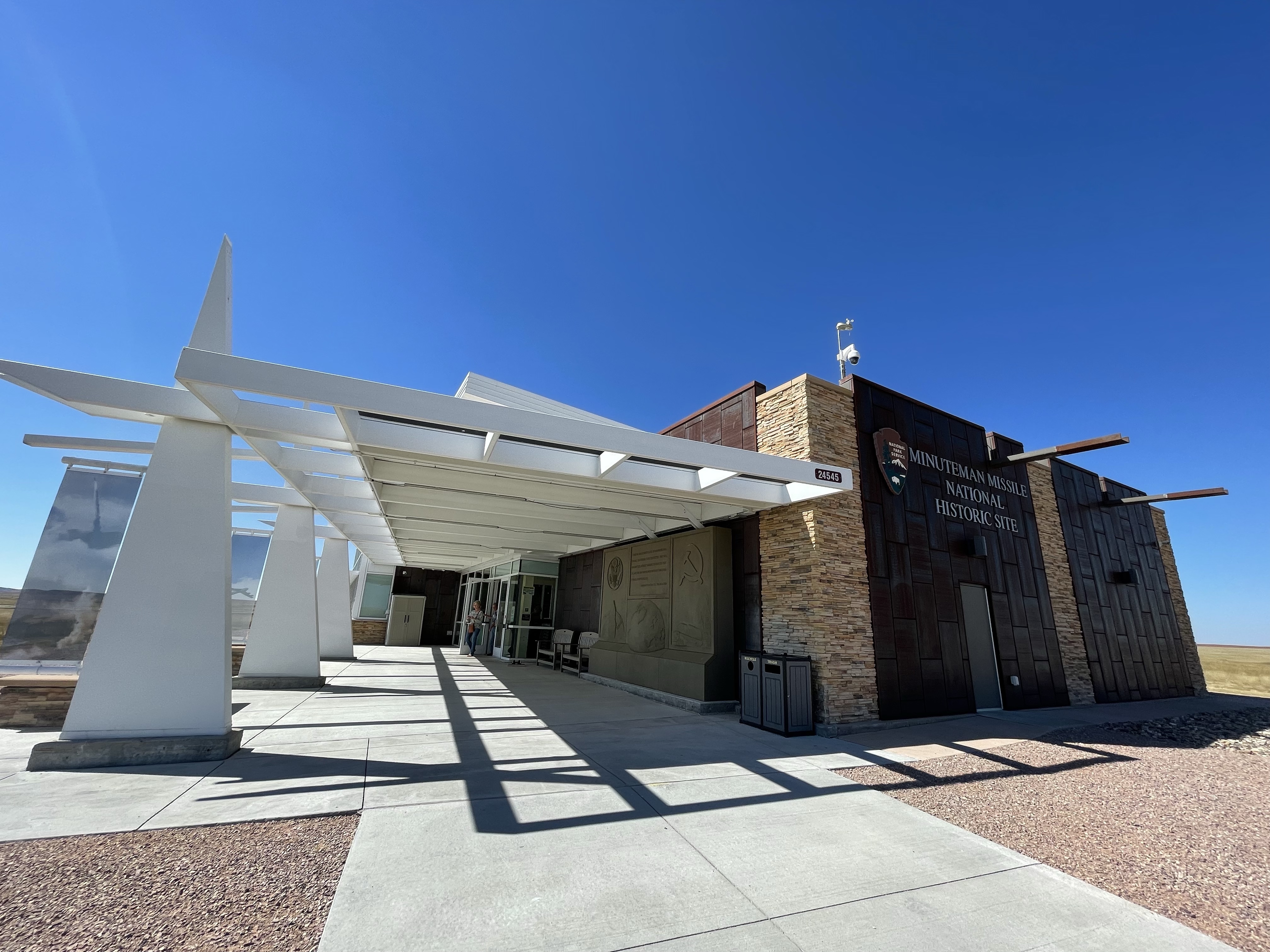
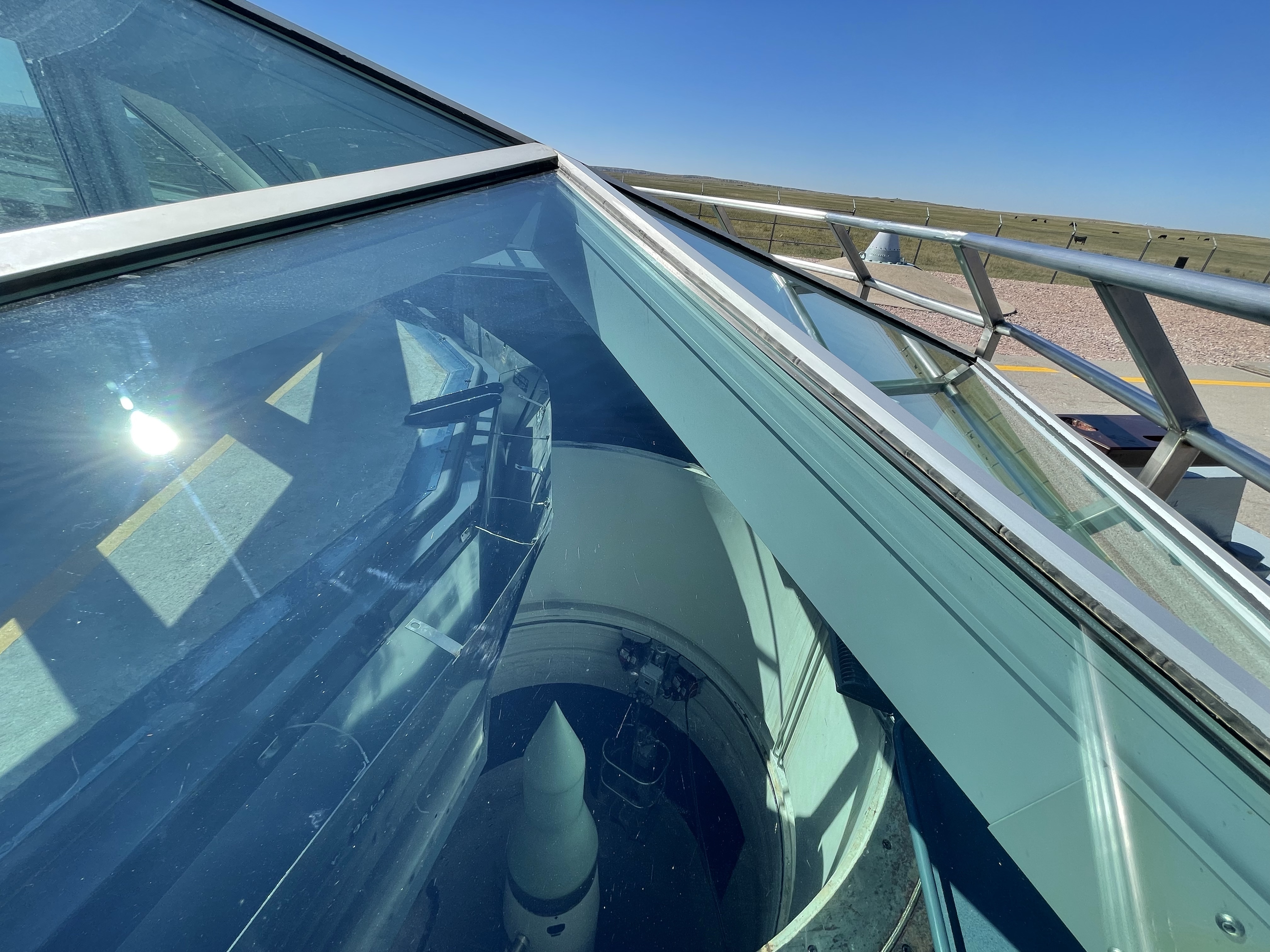
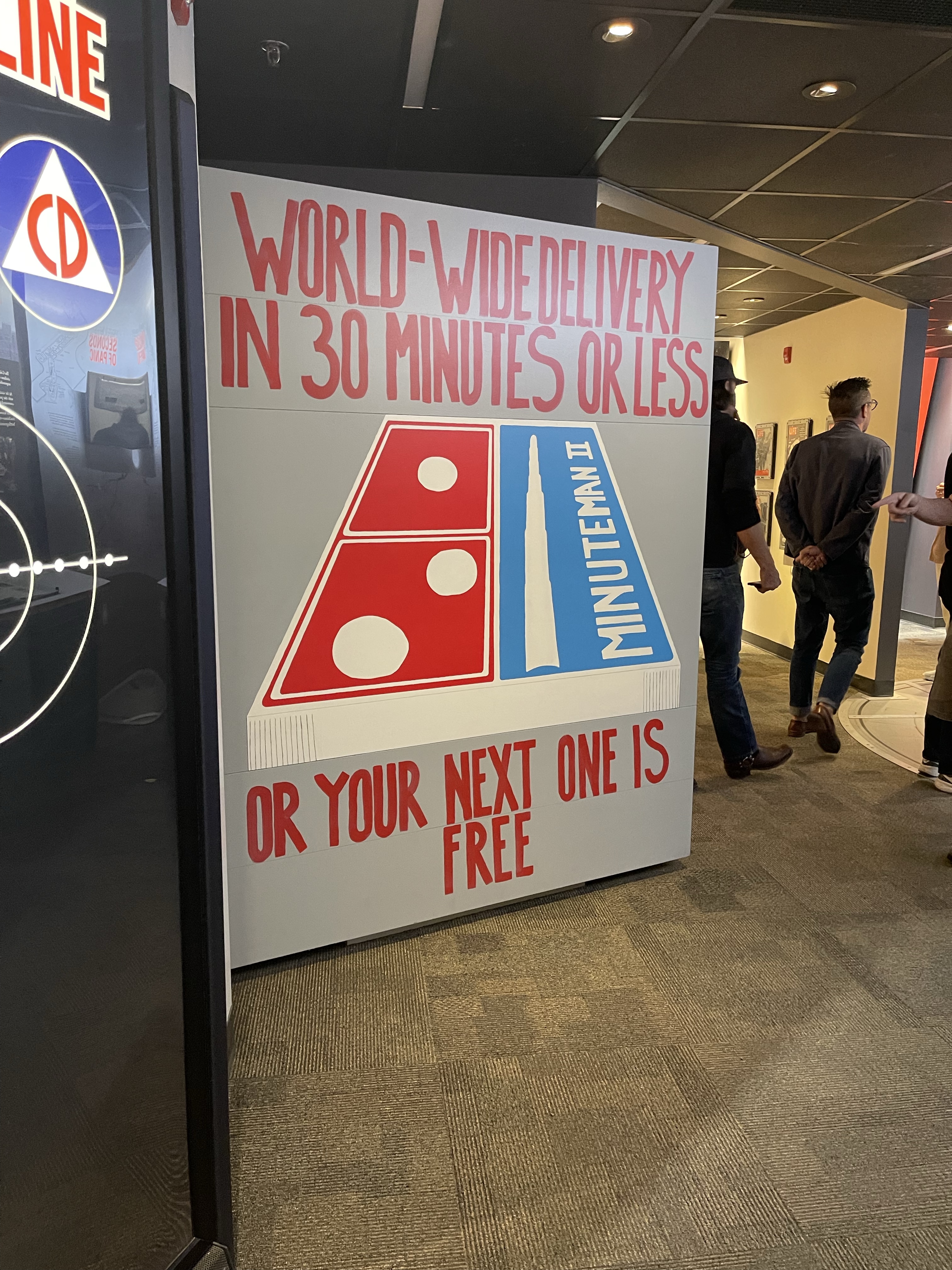
Much of the focus of the museum is on the lives of the men and women whose job it is to sit with their fingers on the button of nuclear war. Deep beneath the surface of the earth two people lived and worked around the clock in submarine-like conditions. The job was excruciatingly boring, but there was also the knowledge that the day it got exciting, the world outside would be ending.
A limited number of tickets to tour the actual launch control facility can be purchased, but these sell out way in advance. I was able to do a virtual tour in the theater room of the visitor center and really enjoyed the rangers’ presentation. This is a great backup option for those who aren’t lucky enough to snag the real deal.
Several other sites are available by driving tour for those interested in learning more about the decommissioned silos and their history. It is definitely worth taking a couple hours to explore this piece of global history.
The Notch Trail
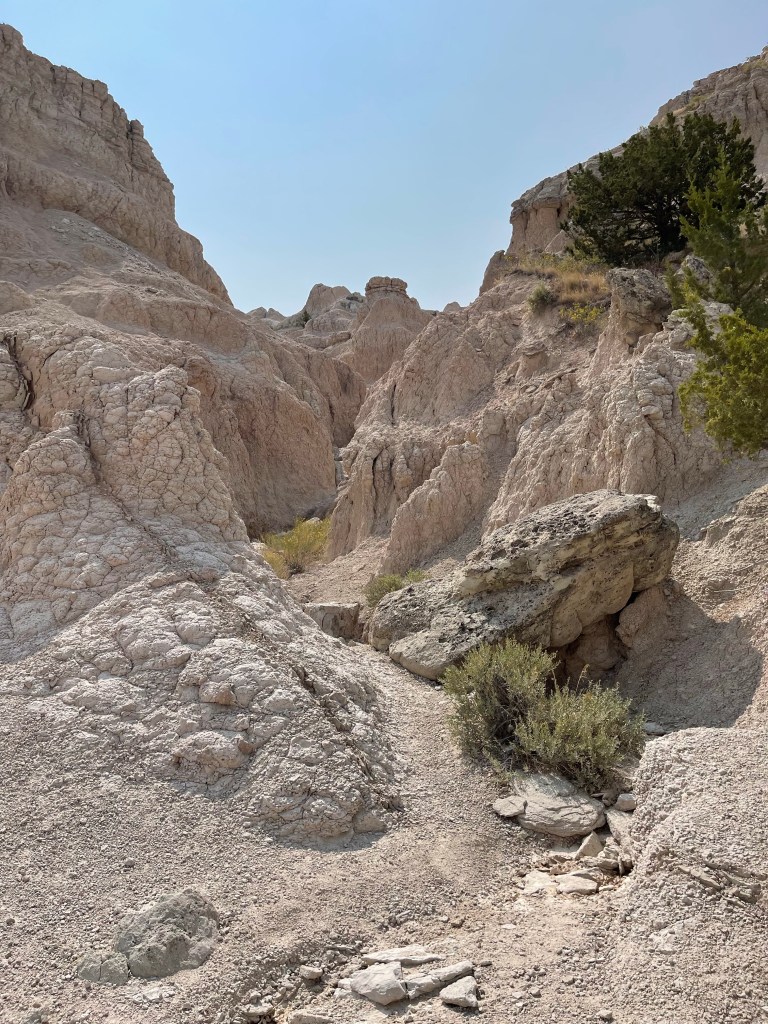
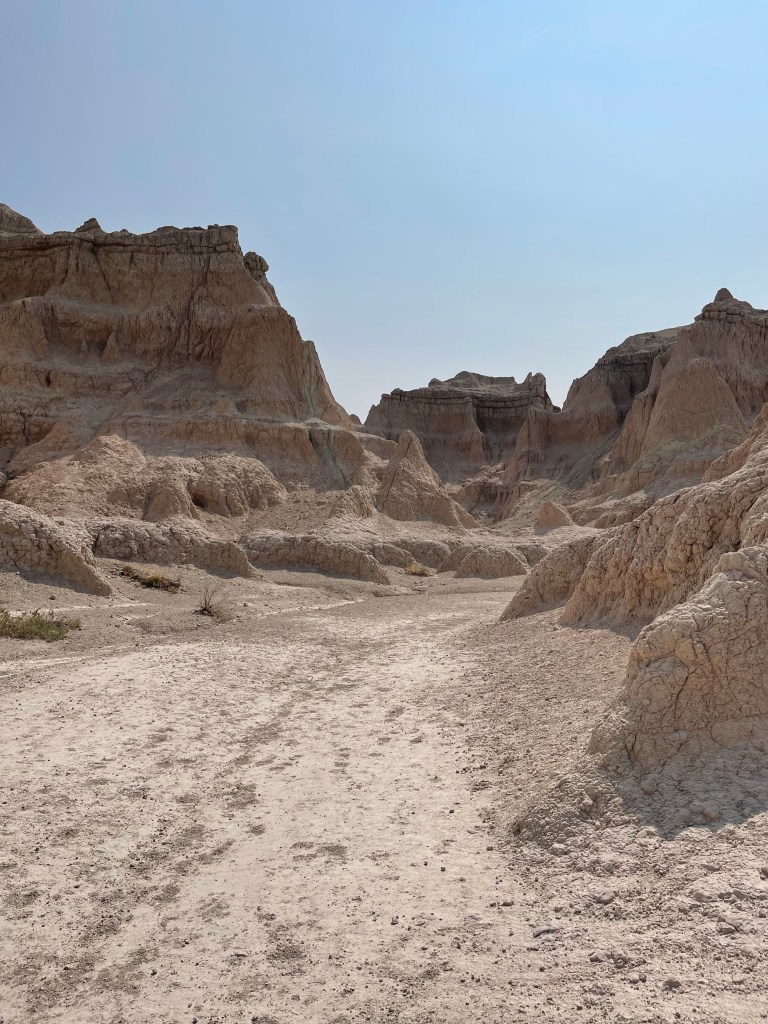
The many short trails in the park are a great way to see the formations from different vantage points. The Notch trail is probably the most famous. Even though it is only 1.5 miles out-and-back, the views and variety are worthwhile.
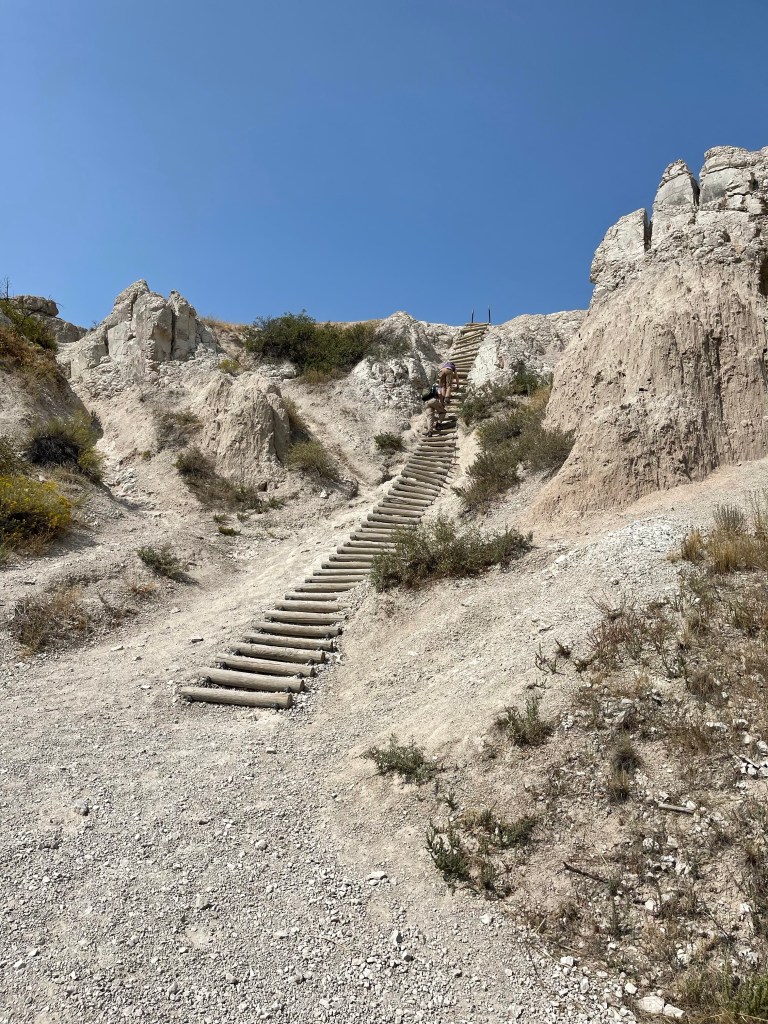
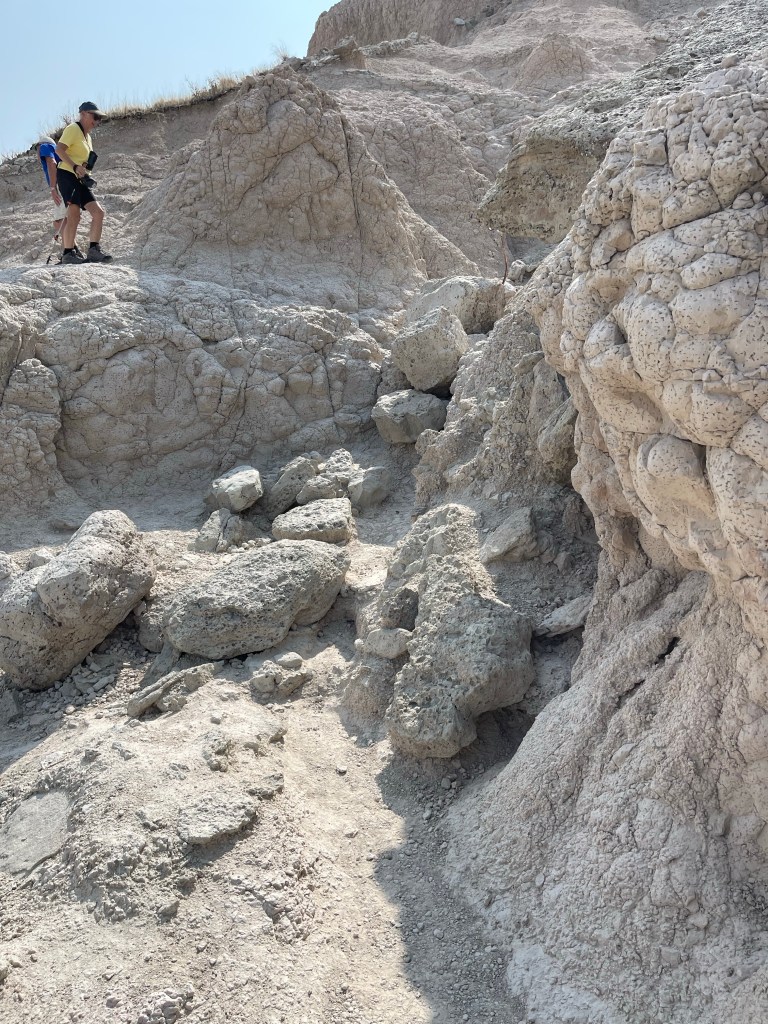
The trail is most famous for the ladder about a half mile into the trail. The log steps provide much needed traction at the bottom and mean hikers need to use their hands near the top. The ladder is not particularly hard to climb, but the desert sun does bake the wood. Bringing gloves for the hike would not be the worst idea, especially for sensitive fingers on sunny days. The descent is a little trickier. I watched several hikers balk at getting started down and there was a bit of line even on a day without many crowds. But everyone was patient and encouraging in the adventure.
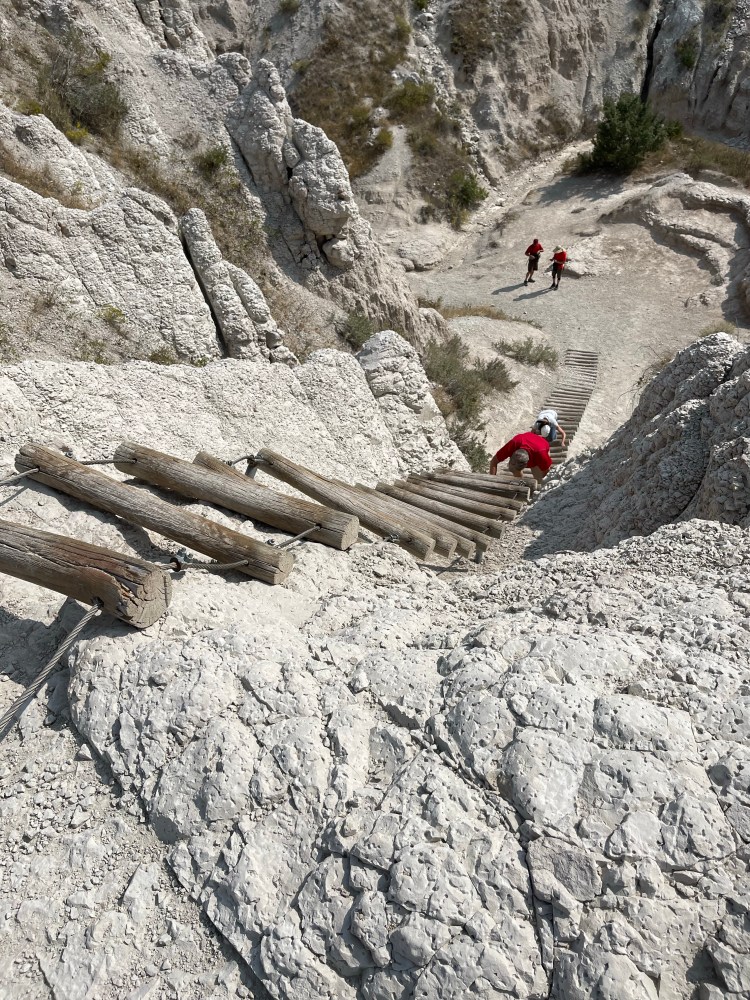
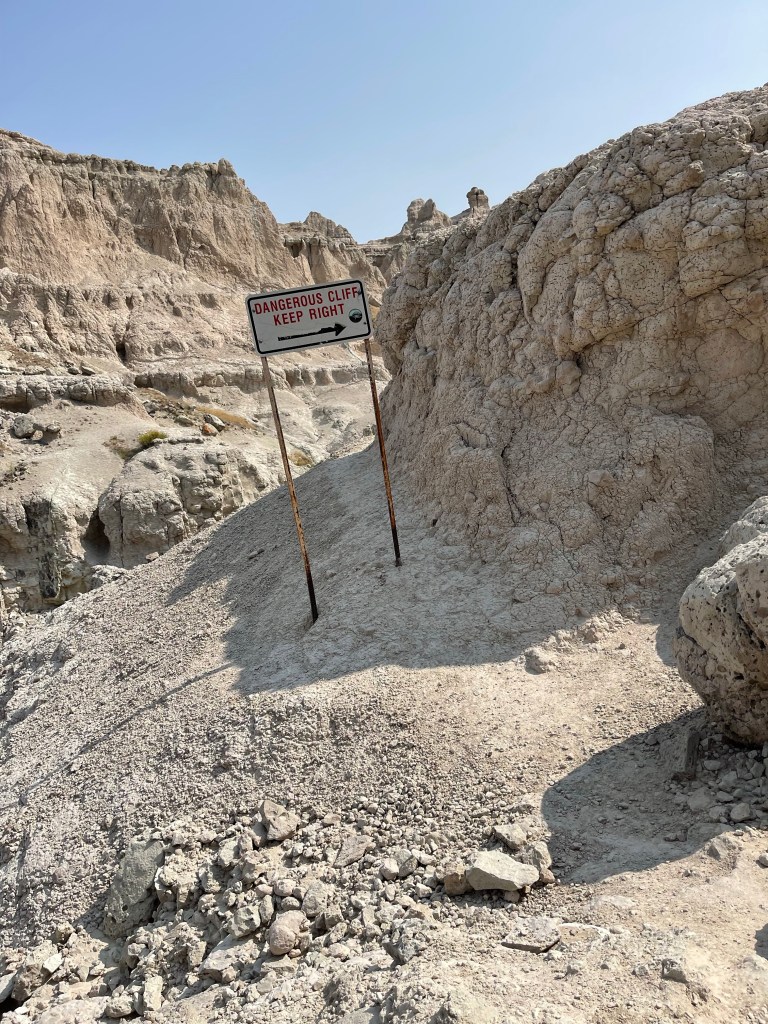
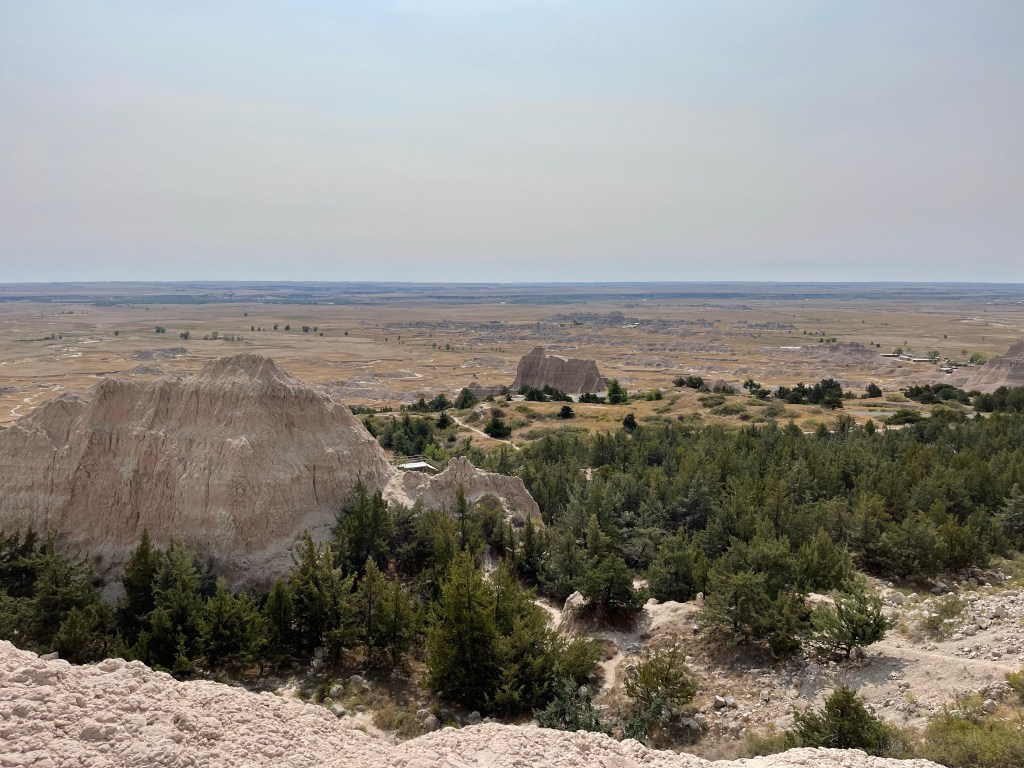
The rest of the trail traverses the ledges among the rocks to a lovely vista. Erosion can make some of the walk a little sketchy. I am not a fan of heights but found the whole trail to be doable with going slow.
Dispersed Camping
Cedar Pass campground is located within the national park. It has a few RV sites and some even offer electric. I would love to stay there someday, but I was having a hard time finding reservations. And I had read a lot about the dispersed camping on “The Wall” and wanted to check it out.
The Wall (Hey! Is this what Wall Drug is named after?) can be found to the east of 240 on the edge of the national park. Maps may note the region as Nomad Dispersed Camping area or Steer Pasture Overlook Dispersed Camp. Two entrances traverse grazing land and climb steeply to a gravel path on the edge of a bluff. This road is heavily rutted in areas, so low clearance vehicles should be aware. I am not sure I would want to pull a large rig up the road, but I witnessed plenty of large Class As and 5th wheels while I was there.
I highly suggest bypassing the first entrance and doubling back on the second if you are towing so that your passenger side entrance will provide the best views; going in the first entrance would necessitate turning around if you want to walk out onto the bluff. Multiple pull outs along the gravel road are available to campers on a first-come-first-served basis. While I was there, campers seemed to instinctively observe the etiquette of not encroaching on the space of others.
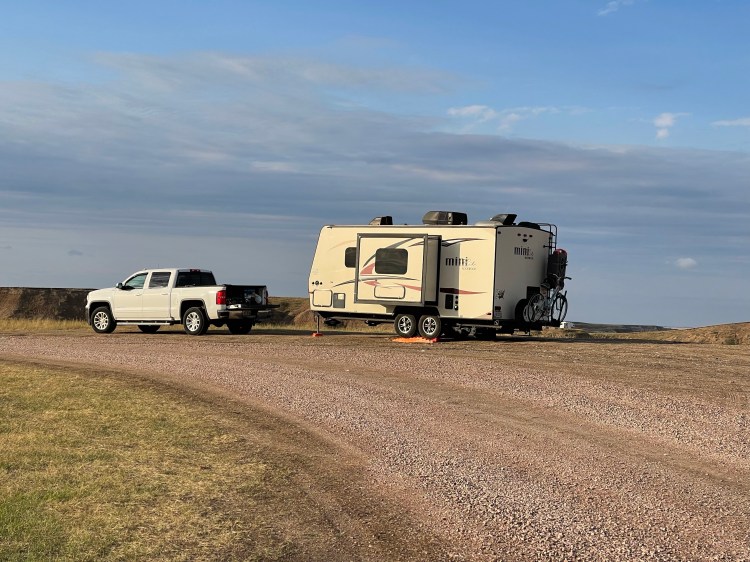
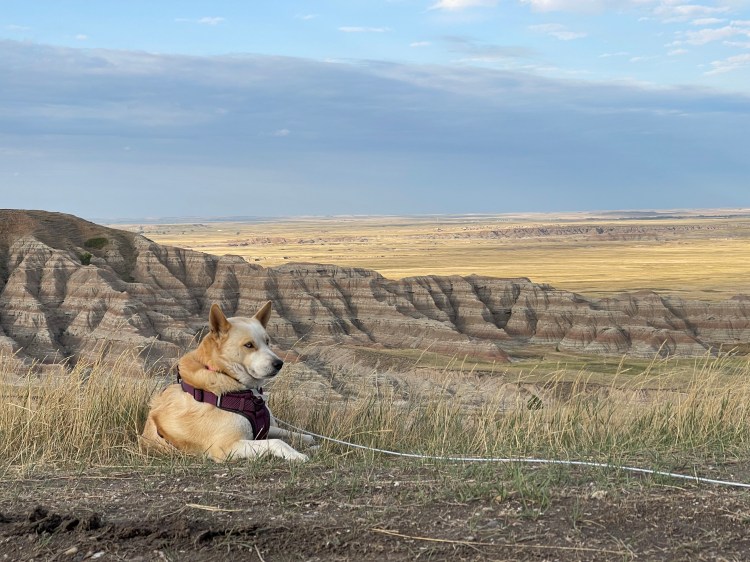
The views were not the only benefit of this camping spot. Blue’s favorite part was the herd of bighorn sheep that frequented the area. She was very convinced she could take one down if given the chance and vibrated with excitement each time she caught the scent of one on the wind.
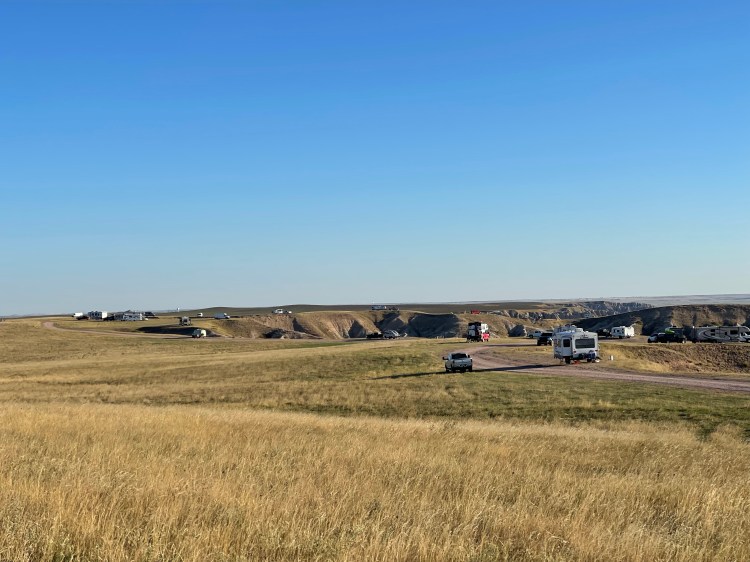
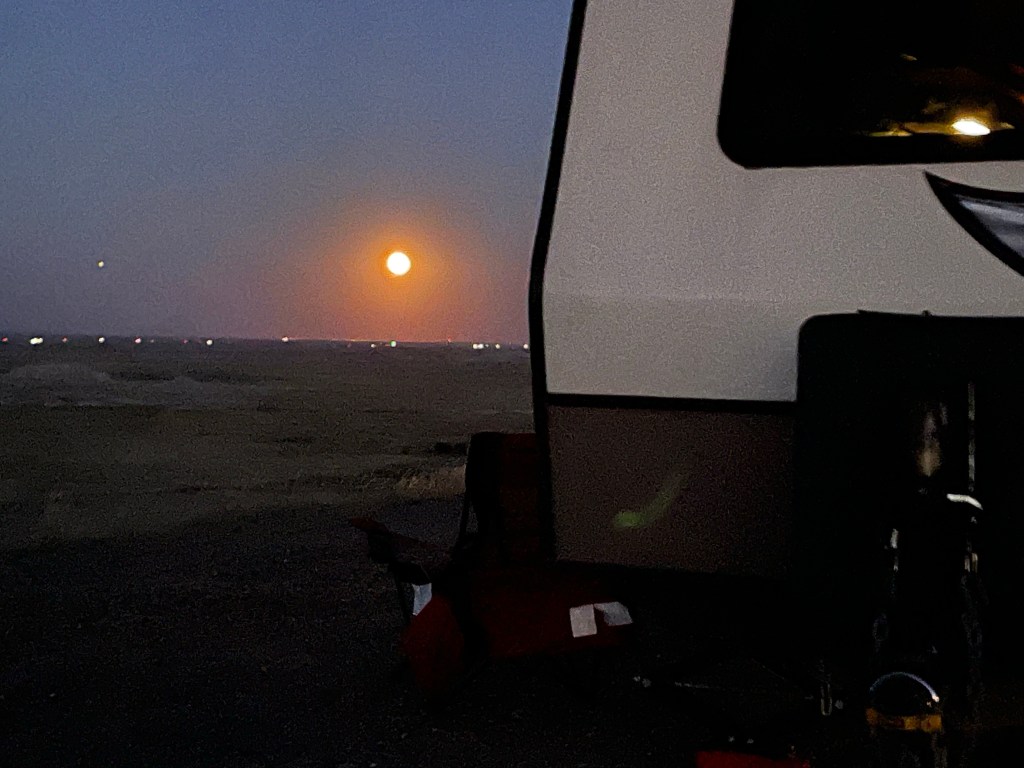
The view from the bluff is the perfect spot to watch the sun rise and set. I was especially lucky to be there during a full moon that lit the landscape late into the night.

This is not remote camping. On one weekend morning, I roughly counted about 100 camping vehicles along the road. It is a great way to dip one’s toes into dispersed camping. I found my neighbors to be some of the most friendly and agreeable travelers I have encountered in some time. As far as I could tell, there are no real rules, but everyone maintained an air of respect for one another. On my last night in the area I had a bundle of firewood that needed to be burned before venturing too far from where it had been purchased, so I invited a few surrounding campers to join me. It was an evening of camaraderie that can only be found at a gathering of like-minded adventurers. As the sun set, we sat around the flames swapping stories of our travels and sharing beers. I can only imagine how many times those grasslands had witnessed similar scenes over the centuries.
 A Less In Tents Life
You’re so lucky to have seen a black-footed ferret in the wild! What a treat!
LikeLike